GCash Payment Choices for a PHP 500 Budget: Minimums and Fees
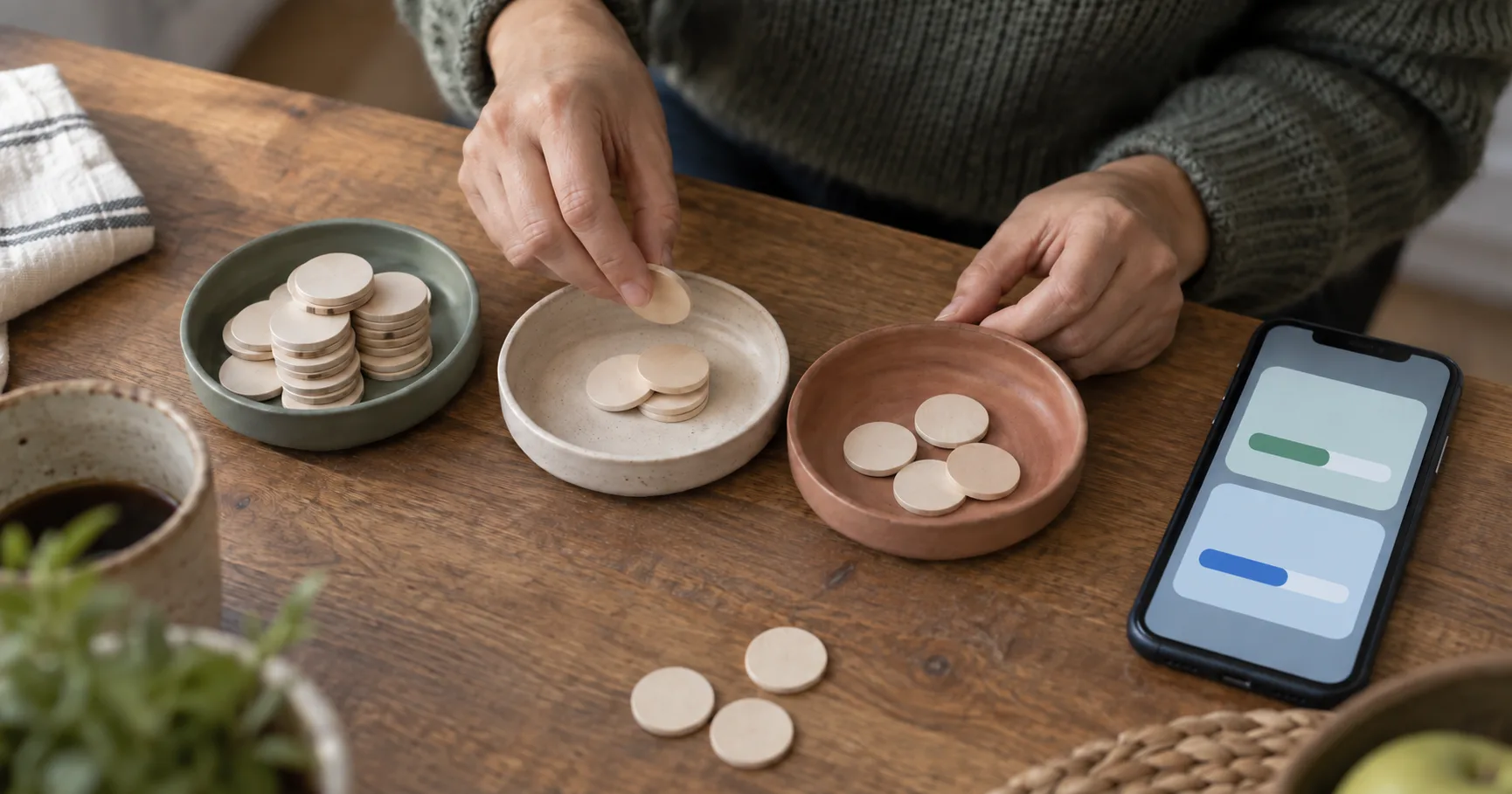
Hypothetical worked example: You have PHP 500 in your wallet and want to deposit without spending it all. Imagine a cashier shows GCash with a PHP 200 minimum and a PHP 10 charge paid outside the deposit. These are invented figures for the calculation, not Coral Vault terms.
- Choose a PHP 300 deposit, which clears the hypothetical PHP 200 minimum and leaves room in your budget for the separate charge.
- Add the hypothetical PHP 10 charge to the PHP 300 deposit; the total leaving your wallet is PHP 310.
- Subtract PHP 310 from your starting PHP 500; you retain PHP 190 in the wallet and receive PHP 300 as playable balance.
- Divide the PHP 10 charge by the PHP 300 credited amount; the cost equals about 3.33% of that deposit.
Now imagine a bank route with no charge but a PHP 500 minimum. Depositing through it would put the entire PHP 500 into the account and leave nothing in your wallet. The bank route costs less in this example, while the GCash route preserves PHP 190 for other spending. Neither invented schedule tells you what Coral Vault actually offers. The useful comparison is the amount you can commit, the amount credited, and the cash you still control afterward.
A minimum sets the entry point, not the total bill
A payment minimum is usually the smallest deposit request a cashier will accept for a selected route. It does not, by itself, tell you how much must be available in your wallet. A charge collected on top of the request raises the required balance. A charge deducted from the deposit instead reduces the amount credited. Those two arrangements produce different results even when the charge has the same face value.
Apply the same hypothetical PHP 10 charge inside the PHP 300 deposit rather than outside it. Your wallet would fall from PHP 500 to PHP 200, but only PHP 290 would reach the account. If your plan requires PHP 300 in playable funds, requesting PHP 300 would miss that target. You would need to check whether a larger request clears the channel minimum and stays within your budget.
Fees can also arise at different points, including a wallet cash-in, the payment channel, or the cashier. Treat each quoted charge as a separate line until the final confirmation shows who collects it. A zero-fee label at one stage does not establish that every stage is free. The final payable amount and expected credit are the figures that settle the arithmetic.
Compare the routes your cashier actually shows
Payment availability depends on the account and the options displayed in the cashier. GCash, another e-wallet, a bank transfer, or a card should enter your comparison only when that route appears as selectable. For a small budget, a method with a low charge can still be a poor fit if its minimum consumes money you meant to keep available.

- Check whether the Minimum Deposit applies across the cashier or whether your selected payment route displays a different threshold.
- If Maya appears beside GCash, compare the final payable amount and expected credit using the same planned deposit.
- For a bank or card option, check the displayed minimum and any charge before assuming a familiar payment method costs less.
- For every selectable route, note whether the charge is added to your payment or taken from the amount credited.
The best route changes with your aim. If you want the largest playable balance from exactly PHP 500, a no-charge route may win when its minimum is affordable. If you need to keep part of that PHP 500 for everyday expenses, a lower-minimum route may suit you despite a modest charge. That trade-off is about your remaining cash, not a promise of a better gaming result.
Run the calculation before confirming
Use one budget and one planned deposit when comparing methods. Changing both numbers between options makes the apparent fee difference hard to interpret. Start with the amount you can comfortably part with, then use the cashier’s displayed terms to calculate the total debit, credited amount, and wallet remainder.
- Write down your available wallet balance and the amount you want credited, keeping money needed for other expenses outside the deposit plan.
- Read the selected route’s minimum, then raise or lower your request only if the displayed limit and your budget permit it.
- Add any charge collected separately, or subtract any charge deducted from the deposit, to find the actual wallet debit and credit.
- Review the confirmation screen against your calculation, and stop if the payable amount or expected credit differs from what you planned.
Suppose the cashier offers two selectable routes with the same minimum. If one deducts a charge and the other adds it, compare them at the amount you need credited rather than at the amount you type into the form. A PHP 300 request that credits PHP 290 is not equivalent to one that credits PHP 300. Conversely, an added charge matters most when it pushes the total debit beyond the cash you intended to use.
Do not count a bonus as a reduction in the payment charge. A bonus may have separate eligibility and use conditions, while a fee changes your cash position immediately. Keeping those calculations separate lets you see whether the payment route itself fits your PHP 500 limit.
What the comparison can and cannot settle
The cashier can show whether GCash is available for your account and what a proposed transaction would cost. A general payment-method label cannot establish the minimum, fee treatment, or credited amount for your particular request. If the displayed figures change after you select a route or enter an amount, recalculate before confirming.
Also check any later cash-out route separately if access to leftover funds matters to your choice. Deposit availability alone does not establish that money can return through the same channel. For a PHP 500 budget, the sound choice is the route whose displayed total debit, expected credit, and remaining wallet cash all match your plan.